Yokohama Sankeien YASOU

Night Garden Experience

Japanese color and light, explored through sound Night at Sankeien Japanese color and light, explored through sound — Night at Sankeien

Explore with sound

What is Yasō?

Stroll the garden by night —wander from scene to scene,where colors layer and sounds lead the way.As your vantage point shifts, so does the view,and so do the sounds around you.Discover the layers of time that gather at Sankeien by night,the garden created by Hara Sankei.

About Hara Sankei, the garden's founder (opens in a new tab)

At each spot, where history and nature intertwine,distinct colors and sounds come together,composing the night scenery like a single unfolding story. At each spot, where history and nature intertwine,distinct colors and sounds come together,composing the night scenery like a single unfolding story.

Teahouse Plaza

Soft light welcomes you as the night begins.

Kasane Irome (Color Combination):

Ki-momiji

Outer: KiInner: Suō

Sound

Modern Era | String Quartet

— String Quartet —Light, airy strings blend with the lights glowing by the water.Your journey through the night garden begins here.

Gomon Gate

Step through a gate steeped in history, and slip beyond time.

Kasane Irome (Color Combination):

Kikujin [woven color]

Warp: AoWeft: Ki

*A woven color is created by weaving warp and weft threads of different hues, rather than by layering fabrics.

Sound

Heian & Kamakura Periods | Kotsuzumi Hand Drum

— Kotsuzumi Hand Drum —The ancient sound of the Heian and Kamakura periods rings out, crisp and dignified, in harmony with the woven color.

*Kotsuzumi: a small hourglass-shaped drum played on the shoulder.

Every colorhas its reason.

Not blending colors,but layering them — each one left intact.This is Kasane Irome, the art of layering colors, handed down since the Heian period (794–1185). Court nobles wore robes in carefully chosen color combinations to reflect the seasons.

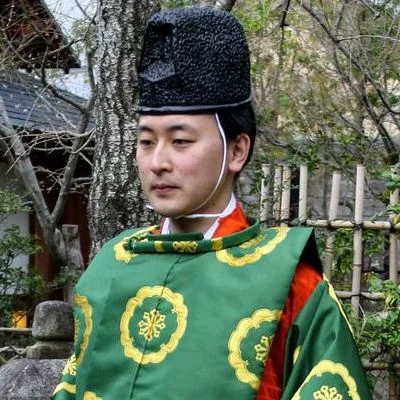
Tokichika Yamashina

Color Supervisor30th-generation heir of the Yamashina family

Tokichika Yamashina

Tokichika Yamashina is the Waka-sōke (designated successor) of the Yamashina school of Emondō, the traditional art of dressing people in imperial court attire. Born in Kyoto in 1995, he completed a master's program at the Graduate School of Human and Environmental Studies, Kyoto University. He is the 30th-generation heir of the Yamashina family, a former court noble family. For generations, the family has made shōzoku, the formal attire of the imperial court, and dressed its wearers. He has served as a dresser (emon) at the Three Imperial Festivals — the Kasuga Festival, the Kamo Festival (Aoi Matsuri), and the Iwashimizu Festival — as well as at the 2019 Reiwa enthronement ceremonies. He also appears in the media, gives lectures for companies, government bodies, and cultural organizations, plans exhibitions, and serves as a historical costume consultant for history programs. As Representative Director of the Yamashina Yusoku Research Institute and a researcher at the Doshisha University Center for the Study of Court Culture, he is dedicated to preserving and sharing the culture of the imperial court. For the YASOU light-up design, he takes part as a member of the creative unit IN-EI.

Rinshunkaku Waterside

Light reflected on the water, swaying softly.

Kasane Irome (Color Combination):

Tsukikusa

Outer: HanadaInner: Usu-hanada

Sound

Edo Period | Shamisen

— Original Piece for Shinnai-bushi Voice and Shamisen —This piece likens "Hakuun" (White Clouds), a Zen phrase Hara Sankei loved, to the moon.Voice and shamisen drift alongside the night view by the water.

*Shinnai-bushi: a style of narrative singing accompanied by the shamisen, a three-stringed Japanese lute.

Approach to Choshukaku

In the depths of stillness, listen to autumn.

*Choshukaku literally means "Pavilion for Listening to Autumn."

Kasane Irome (Color Combination):

Shiragiku

Outer: ShiroInner: Ao

Sound

Edo Period | Shamisen

— Shinnai Nagashi —Listen closely to the shamisen and its lingering echoes.Take your time and savor the quiet of the garden at night.

*Shinnai nagashi: an Edo-period custom in which Shinnai-bushi musicians strolled the streets at night, playing the shamisen as they walked.

Inner Valley: Rengein & Bamboo Grove

Deep within the greenery, another quiet hour awaits.

Kasane Irome (Color Combination):

Matsugasane

Outer: MoegiInner: Murasaki

Sound

Edo Period | Shamisen

— Shinnai Nagashi —The lingering notes of the shamisen mingle with the shadows of the trees.The deeper you walk into the garden, the more the night reveals its changing faces.

Kaiganmon Gate (Seaside Gate)

Imagine the sea that once lay here.

*Sankeien once faced the sea; the waters before it have since been reclaimed as land.

Kasane Irome (Color Combination):

Hanasusuki

Outer: ShiroInner: Usu-hanada

Sound

Modern Era | String Quartet

— String Quartet —Listen to the gentle flow of the strings, and imagine the sea that once stretched out here.

Wisteria Trellis

Bathed in soft light that evokes wisteria in bloom.

Kasane Irome (Color Combination):

Kareiro

Outer: ShiroInner: Usu-murasaki

Sound

Modern Era | String Quartet

— String Quartet —Gentle strings merge with light reminiscent of wisteria blossoms.Quietly savor the lingering impressions of your walk through the garden.

Harmony of Sound

Sankeien is home to historic sites and architecture spanning the Kamakura, Edo, Meiji, and Taisho periods.Echoing these layers of time, three distinct sounds travel through the garden, guiding visitors across the landscapes of its history.

  • Tosha Seiko

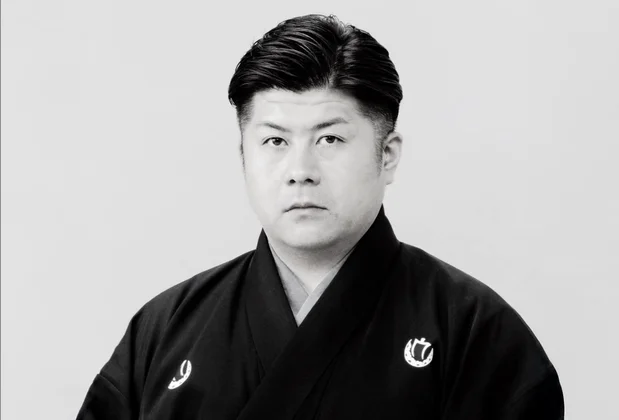
    Kotsuzumi Tosha Seiko

    Hayashi (traditional ensemble) percussionist of the Tosha school1986: Born in Kyoto, the eldest son of the late Living National Treasure Tosha Meisho.1991: Began studying hayashi at age 3 under Tosha Rosen V (Tosha Seiko) and Tosha Rosen VI, successive heads of the school.1993: Began studying the taiko drum at age 7 under Keisuke Inoue of the Kanze school of taiko.1994: Performed with his father at Carnegie Hall in New York, becoming the youngest performer ever to appear there.Today, he is active in kabuki and nagauta (shamisen music for kabuki) concerts.

  • Shinnai Shiga

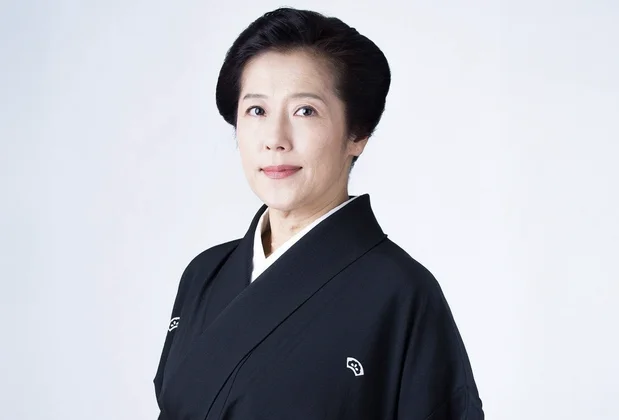
    Shinnai-bushi Shamisen Shinnai Shiga(Mika Shigemori)

    Third head (iemoto) of the Kenshin school of Shinnai-bushiGranddaughter of garden designer Mirei ShigemoriBorn in KyotoWith garden designer Mirei Shigemori as her grandfather and Japanese dancer Yugō Shigemori as her mother, she grew up surrounded by traditional Japanese arts such as tea ceremony, ikebana and dance.

    From early childhood, she studied Shinnai-bushi, a form of Edo jōruri (narrative shamisen music), under Shinnai Shiga-no-Daijō, founder of the Kenshin school, and Fujimatsu Kikusaburō, head of the Shin school.She also studied kouta (short shamisen songs) under Satozono Shizue, grand master of the Satozono school, and Satozono Shizuka.

    In 2012, she succeeded to the headship of the Kenshin school and took the name Shinnai Shiga.Since then, she has devoted herself to teaching her school's members and training the next generation.

  • Ritsumeikan University Symphony Orchestra

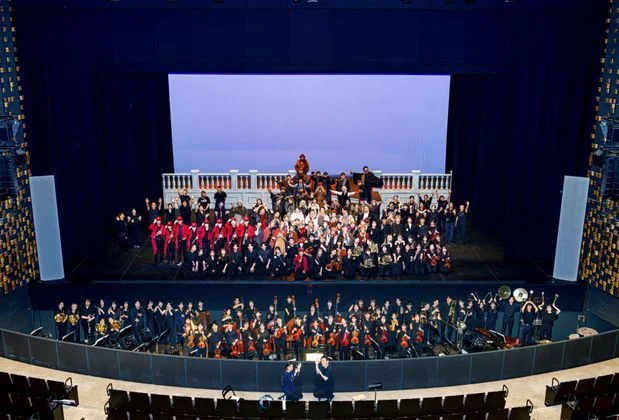
    String Quartet Ritsumeikan University Symphony Orchestra

    Founded in 1955, the Ritsumeikan University Symphony Orchestra celebrated its 70th anniversary in 2025. Aiming to be "a student orchestra of the highest caliber in Japan," it works on long-term growth, including regular opera productions and regional concerts. Guided by its vision of being "a student orchestra rooted in the community," it performs mainly in Kyoto, Osaka and Shiga, where the university's campuses are located. In September 2026, it presented its second opera production, a complete performance of La Bohème in the original Italian, to great acclaim.

Closing message

Walk the seven points of view.The colors shift from late autumn into winter.The sounds drift across the garden.Change your point of view, and the scenery changes, too.A night at Sankeien, told through Japanese color, light, and sound.

This is

Yokohama SankeienYASOU.

Event Information

Event

Yokohama Sankeien YASOU — A Night Stroll Through the Garden(YASOU: "night music")

Dates

Fridays, Saturdays, Sundays and national holidaysfrom Friday, November 20 to Sunday, December 20, 2026 (16 days in total)

Venue

Sankeien Garden, a Nationally Designated Place of Scenic Beauty(58-1 Honmoku Sannotani, Naka-ku, Yokohama)

Hours

Event hours: 5:15 PM – 9:00 PM (last entry 8:30 PM)*Regular garden hours end at 5:00 PM (last entry 4:30 PM).*The event will go ahead in light rain but may be canceled in severe weather (updates will be posted on our official Instagram).

Night Admission

Adults (high school age and older) ¥1,000 / Children (elementary and junior high school students) ¥500 / Preschool children: Free*Online tickets are ¥100 off the prices above.*Sankeien admission tickets, annual passports, complimentary tickets, and all other discount tickets are not valid for this event.

Access

① By Train & BusFree Shuttle Bus (Fridays, Saturdays, Sundays, and national holidays, Nov. 20 – Dec. 20 only)Negishi Station (Bus Stop 9) ↔ Sankeien-Minami-Mon Iriguchi bus stop (runs approx. every 20 minutes)View the timetable here*You can also reach the garden by Yokohama Municipal Bus from Yokohama Station, Sakuragicho Station, Motomachi-Chukagai Station, and other stations.

② By CarParking near Sankeien's South Gate (recommended)Honmoku Citizens' Park: 265 spaces / Honmoku Citizens' Pool: 165 spacesSankeien Main Gate Parking: 60 spaces

Contact

YASOU Office, Kaze no Heritage Co., Ltd.Contact form

Credits

Organized by: Kaze no Heritage Co., Ltd. / Co-organized by: City of YokohamaSpecial cooperation: Sankeien Hoshokai Foundation / In cooperation with: Yokohama City Tourism AssociationSupported by: Japan Tourism Agency (FY2026 Program to Promote Area-Wide Visitor-Readiness, Including the Prevention and Mitigation of Overtourism)

Free admission for Naka Ward residents

Sunday, November 22

Please present an official ID showing your Naka Ward address (such as a driver's license or My Number Card) at the reception desk (Main Gate or South Gate).

View 1Teahouse Plaza View 2Gomon View 3Rinshunkaku Waterside View 4Approach to Choshukaku View 5Inner Valley: Rengein & Bamboo Grove View 6Kaiganmon View 7Wisteria Trellis Main Gate South Gate